How to Build Your Meals Around Protein
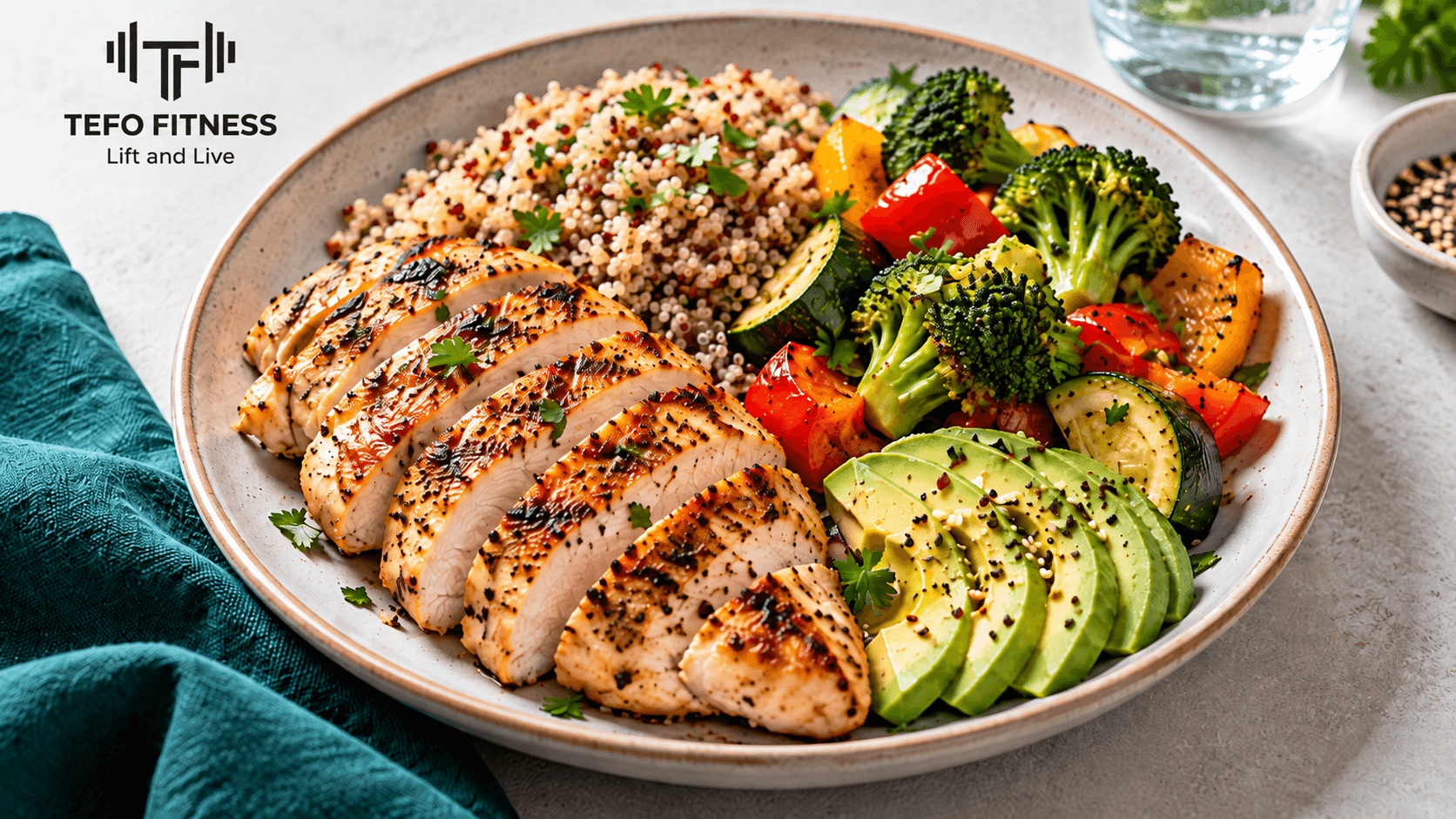
3 Simple Ways to Build a High-Protein Meal
Lately, we are seeing a big trend around consuming more protein, incorporating more of it into our diets, and the supposed benefits that come with it. If you are trying to figure out how to build a high-protein meal, there is more to it than simply adding as much protein as possible. And let me tell you, it is all a bunch of… truth, to an extent.
Protein is made up of amino acids that your body uses to repair and rebuild muscle. During weight loss, higher protein intake has been shown to help preserve muscle mass, particularly in adults with overweight or obesity (Kokura et al., 2024). Protein can also be very satiating, so for someone trying to lose weight, prioritizing protein may help them feel fuller and make it easier to manage their calorie intake.
Now, we are seeing more and more brands launch products labeled “high-protein” and marketed as healthier alternatives. However, that is not always the case. Just because something has more protein does not mean it is inherently healthier. The goal should not simply be to add as much protein as possible. In today’s blog, we will discuss how to increase your protein intake while still prioritizing health and a well-rounded, nutritious diet.
1. Start With a Quality Protein Source
I want to start with this one because it is the most important piece in this puzzle. You need to prioritize the quality and type of protein, not just the quantity. Now, how do we know what would qualify as a quality protein?
A quality protein source provides the essential amino acids your body needs. It is also well digested and absorbed, allowing your body to use those amino acids for muscle repair and recovery. Protein quality is commonly evaluated based on its essential amino acid profile and digestibility (Food and Agriculture Organization of the United Nations [FAO], 2013).
Foods like eggs, dairy, fish, chicken, lean meats, soy, and other protein-rich foods can all help you meet your protein needs. The goal is not to chase whatever product has the biggest “high-protein” label on the package, but to start your meal by asking yourself, “What is my protein source going to be?”
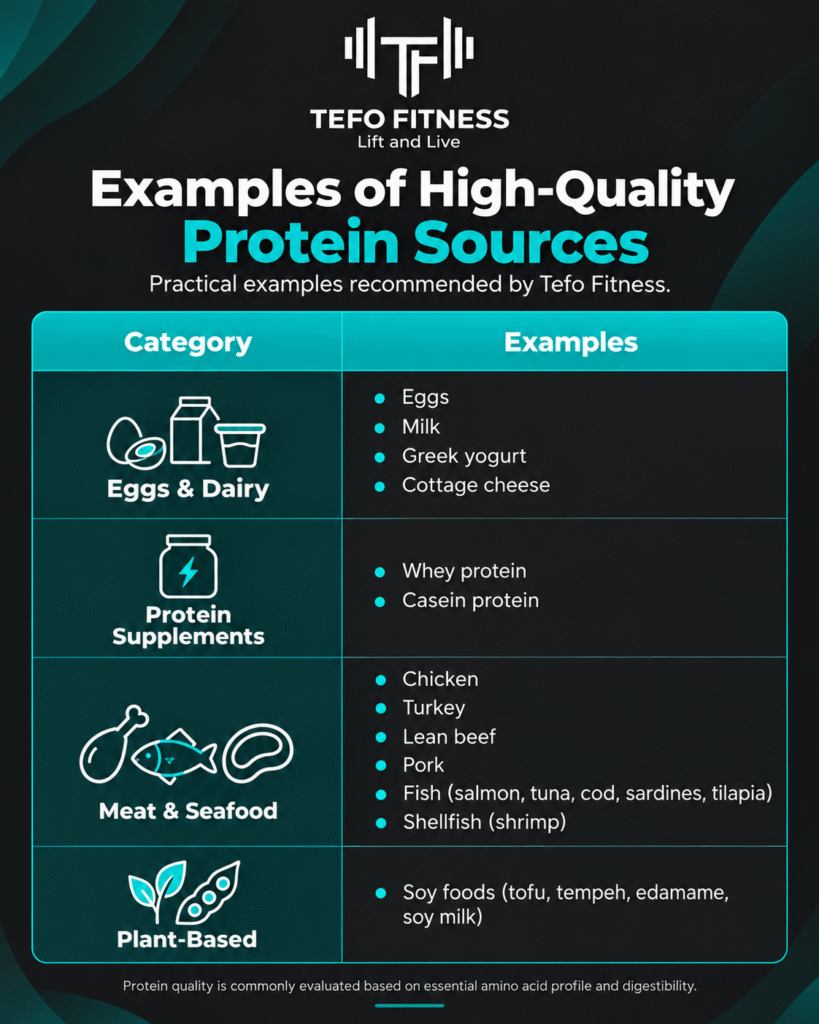
Some examples of high-quality protein sources are:
- Eggs
- Milk
- Greek yogurt
- Cottage cheese
- Whey protein
- Casein protein
- Chicken
- Turkey
- Lean beef
- Pork
- Fish, including salmon, tuna, cod, sardines, and tilapia
- Shellfish, including shrimp
- Soy foods, especially tofu, tempeh, edamame, and soy milk
These are just some examples of healthy protein sources you can use when planning your meals. You do not need to eat the same chicken breast every day or rely on protein shakes to meet your needs. Find protein-rich foods you actually enjoy and can consistently include in your diet.
2. Build a Balanced Meal, Not Just a High-Protein Meal
This is important because your body requires a wide range of nutrients to function properly, so focusing solely on protein intake is not the healthiest approach. When you are planning your next meal, protein should be the main actor, but any good show needs a strong supporting cast, not just a good lead actor. What would “The Office” be without Kevin, Angela, or Kelly?
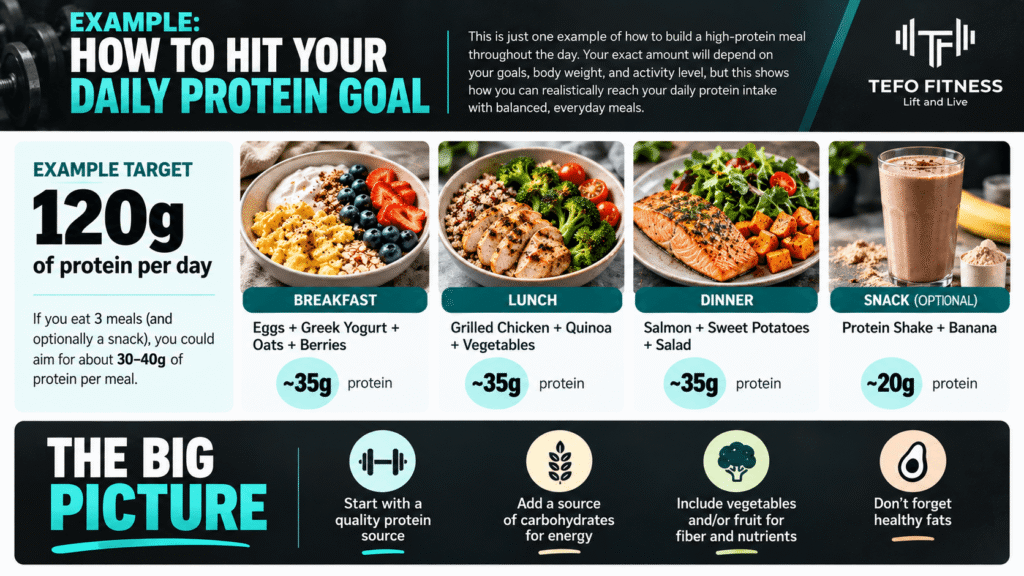
A balanced high-protein meal should have the main actor (protein), then a source of carbohydrates, which are one of your body’s primary sources of energy, like rice, potatoes, oats, bread, pasta, fruit, etc. An important distinction here is that we want to prioritize whole or minimally processed foods most of the time. Many highly processed snack foods often contain less fiber and fewer micronutrients and can also be easier to overconsume.
The same idea applies to all of these new “high-protein” products we are seeing everywhere. A cookie with extra protein is still a cookie. That does not make it bad, and there is nothing wrong with enjoying one, but having more protein does not automatically make it a healthier choice. Protein content is only one part of the nutritional picture.
From there, your plate should also include some vegetables and/or fruit. These are great sources of fiber, vitamins, minerals, and other nutrients your body needs to function properly. Lastly, fats! Rather than avoiding fat altogether, focus more often on sources of unsaturated fats such as avocado, olive oil, nuts, and seeds.
Learning how to build a high-protein meal is really about putting all of these pieces together. Start with your protein source, then build the rest of your plate around it instead of making protein the only thing that matters.
3. Make Your Protein Intake Realistic and Sustainable
I believe that when we see diet trends come and go, a common denominator is how obsessed the general public can get with them. Something that starts as useful advice can quickly turn into “more is always better,” and that is where it can become counterproductive. Instead of helping you reach your fitness goals and live a healthier life, you can end up overcomplicating your diet and focusing so much on one nutrient that you forget about everything else your body needs.
That is why, here at Tefo Fitness, we try to take a more holistic approach to fitness. Protein is important, but you do not need to turn every meal, snack, and dessert into a high-protein version of itself to be healthy or make progress. If you want to keep learning about how nutrition, training, recovery, and consistency all work together, check out more of our fitness and nutrition blogs here.
So, how much protein should you actually eat? If you are wondering how much protein you need per day, there is no single number that works for everyone. For people who exercise regularly, research supports a daily protein intake of roughly 1.4–2.0 grams per kilogram of body weight, or about 0.6–0.9 grams per pound (Jäger et al., 2017). Research on resistance training has also found that gains in lean mass tend to plateau at around 1.6 grams per kilogram per day in the average person, although individual needs can vary (Morton et al., 2018).
For someone who weighs 150 pounds, that would be roughly 95–135 grams of protein per day. You do not need to hit the same number every single day, and you definitely do not need to force-feed yourself protein just to reach an arbitrary target. Find an intake that supports your goals, fits your diet, and, most importantly, is something you can actually maintain.
In more practical terms, take whatever your daily protein goal is and break it up across the meals you already eat. If your goal is around 120 grams per day and you normally eat three meals, you could aim for roughly 30–40 grams of protein per meal, leaving room for a snack if needed. That could mean eggs and Greek yogurt at breakfast; chicken, fish, tofu, or another high-quality protein source at lunch and dinner; and maybe a protein shake or snack when convenience is needed.
You do not need to pull out a calculator every time you eat or make every single food you consume “high-protein.” The goal is simply to make protein a consistent part of your meals and increase your protein intake in a way that works with your lifestyle.
If you liked what you just read, we have more blog posts on nutrition, fitness, and supplements, as well as free training programs to help you reach your goals. New blogs come out every week, so don’t miss out. And remember: Lift and Live!
RESOURCES:
Food and Agriculture Organization of the United Nations. (2013). Dietary protein quality evaluation in human nutrition: Report of an FAO expert consultation (FAO Food and Nutrition Paper No. 92).https://www.fao.org/4/i3124e/i3124e.pdf?utm_source
Jäger, R., Kerksick, C. M., Campbell, B. I., Cribb, P. J., Wells, S. D., Skwiat, T. M., Purpura, M., Ziegenfuss, T. N., Ferrando, A. A., Arent, S. M., Smith-Ryan, A. E., Stout, J. R., Arciero, P. J., Ormsbee, M. J., Taylor, L. W., Wilborn, C. D., Kalman, D. S., Kreider, R. B., Willoughby, D. S., … Antonio, J. (2017). International Society of Sports Nutrition position stand: Protein and exercise. Journal of the International Society of Sports Nutrition, 14, Article 20. https://doi.org/10.1186/s12970-017-0177-8 Springer Link
Kokura, Y., Ueshima, J., Saino, Y., & Maeda, K. (2024). Enhanced protein intake on maintaining muscle mass, strength, and physical function in adults with overweight/obesity: A systematic review and meta-analysis. Clinical Nutrition ESPEN, 63, 417–426. https://doi.org/10.1016/j.clnesp.2024.06.030 PubMed
Morton, R. W., Murphy, K. T., McKellar, S. R., Schoenfeld, B. J., Henselmans, M., Helms, E., Aragon, A. A., Devries, M. C., Banfield, L., Krieger, J. W., & Phillips, S. M. (2018). A systematic review, meta-analysis and meta-regression of the effect of protein supplementation on resistance training-induced gains in muscle mass and strength in healthy adults. British Journal of Sports Medicine, 52(6), 376–384. https://doi.org/10.1136/bjsports-2017-097608
Get Your Free 8-Week Training Program
Build genuine strength and establish consistent workout habits with our science-backed training roadmap. Enter your email below to receive the complete 9-page PDF protocol in your inbox and get instant download access.
Support Free Fitness Education
Enjoying our free fitness resources? Help us keep fitness education accessible to everyone. Your support is always optional and appreciated.
Support Tefo Fitness