Should You Be Sore After Every Workout? What Soreness Really Means

After a good workout, it is common to feel sore- that little pain or aching in your muscles that makes you move a little stiff. Some people love that feeling; others completely despise it. And after you have been training consistently for a while, you may notice that you do not get as sore as you once did.
Now the question is: should you be sore after every workout? What if you are not? Does that mean your workout was not effective? Or that you are not following the right routine?
Well, let’s dive into it, figure out how much soreness actually matters, and finally answer that question.
Does Soreness Mean a Good Workout?
If you had asked me a few years ago, before I learned more in-depth about training, my answer, based purely on “feeling,” would probably have been yes. You need to be sore. How else would you know if you had a good workout?
I mean, it kind of makes sense, doesn’t it? You go to the gym, you train hard, and for the next couple of days, your muscles are sore. “No pain, no gain” is the saying, right? So pain = gain. Simple equation.
The reality, however, is different, and the science says otherwise.
Pain does not equal gain. Soreness does not inherently mean that you had a great workout, or even a good workout. You can absolutely have an effective workout without feeling sore afterward. In fact, current resistance-training research shows that people can improve strength and build muscle without using soreness as a measure of whether the workout was successful (Currier et al., 2026; Damas et al., 2018).
What Is Muscle Soreness After a Workout?
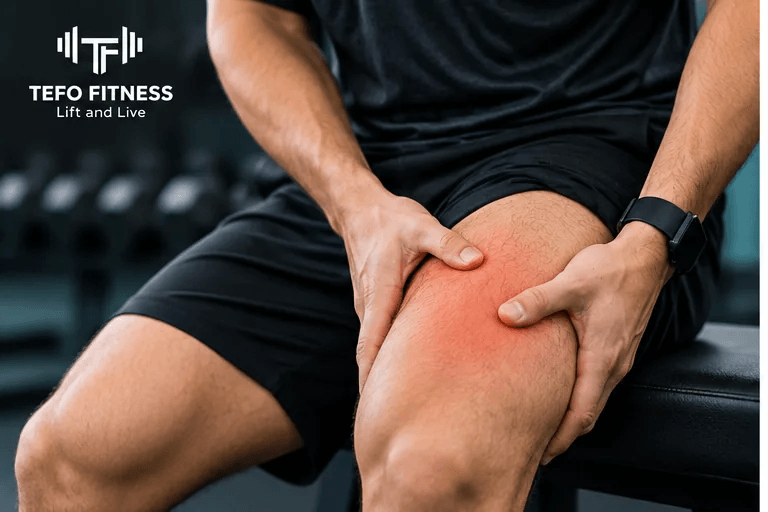
The soreness we are talking about is commonly known as delayed-onset muscle soreness (DOMS). It is that aching, stiffness, or tenderness you may feel in the muscles you trained, usually showing up later rather than during the actual workout. DOMS often becomes noticeable within the next day or two after training, especially after doing an exercise your body is not used to or increasing the difficulty of your workout (Mágero et al., 2026).
For a long time, soreness was often explained simply as “you damaged your muscle fibers, and now they are repairing themselves.” The reality appears to be more complicated than that. Current research suggests that DOMS is a response involving several factors occurring simultaneously, including changes in muscle tissue, inflammation, and alterations in how our nervous system processes pain and sensitivity after exercise. In other words, soreness is not just a direct measurement of how much muscle damage happened during your workout (Jemni et al., 2026).
You are also more likely to experience DOMS when you introduce a new movement, return to training after some time off, suddenly increase your workload, or perform exercises with a strong eccentric component. The eccentric portion is the phase in which a muscle produces force while lengthening, such as lowering the dumbbell during a bicep curl or controlling yourself on the way down during a squat (Jemni et al., 2026; Mágero et al., 2026).
So yes, soreness after a workout is completely normal. But normal does not mean necessary.
Why Am I Not Sore After a Workout?
Remember at the beginning of this blog when I mentioned that after training consistently for a while, you may notice that you are not getting as sore as you once did? That does not automatically mean your workouts stopped working. So, should you be sore after every workout? Not necessarily.
Your body adapts.
There is actually a name for this: the repeated-bout effect. When your body is exposed to similar training again, the same or a similar workout will often cause less soreness and fewer signs of muscle damage than it did the first time. Research looking at repeated bouts of exercise has found significantly less DOMS after the second exposure compared with the first (Doma et al., 2023).
Think about the first time you ever did a hard leg workout. You might have struggled to walk down the stairs for the next two days. Then, after doing that type of training consistently for weeks or months, you can train your legs hard and barely feel sore the next day.
That does not mean the workout stopped working. Your body has simply become more accustomed to that type of training. This is another reason the answer to “should you be sore after every workout?” is no. Your body becoming less sore does not automatically mean your training has become less effective (Damas et al., 2018).
And I want to go back to the very first sentence of this blog: “After a good workout, it is common to feel sore.” That wording was very intentional. I said it is common, not that it is necessary.
A good workout does not equal feeling sore. At all!
Should You Be Sore After Every Workout? The Bottom Line
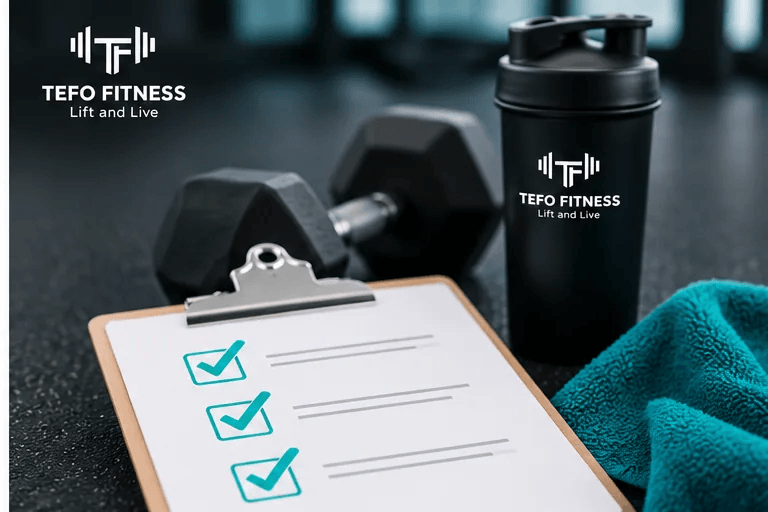
You might not love this answer, but there is no single thing or way to know whether a workout was effective. Rather, it is about looking at your progress from a different angle. Are you getting stronger, faster? Can you do a workout without getting fatigued? Have you seen muscle gain? How is your sleep quality? Are you recovering well after a workout? All these things will tell you whether a routine is effective.
I know it’s not the answer we love to hear because some of us like immediate feedback. However, sometimes things require time, patience, and consistency, and training is one of those things.
So, should you be sore after every workout? No. Soreness can happen after an effective workout, but it should not be the way you measure whether your training is working.
If you want to learn more about measuring progress in the gym, check out our guide to progressive overload for beginners.
Now, if you want to follow a program that works (assuming you follow it consistently), then check out our library of free training programs for every level you might be at right now. Whether you have never stepped into a gym or you have plenty of experience, there is one program for you!
References
Currier, B. S., D’Souza, A. C., Fiatarone Singh, M. A., Lowisz, C. V., Rawson, E. S., Schoenfeld, B. J., Smith-Ryan, A. E., Steen, J. P., Thomas, G. A., Triplett, N. T., Washington, T. A., Werner, T. J., & Phillips, S. M. (2026). American College of Sports Medicine position stand: Resistance training prescription for muscle function, hypertrophy, and physical performance in healthy adults: An overview of reviews. Medicine & Science in Sports & Exercise, 58(4), 851–872. https://doi.org/10.1249/MSS.0000000000003897
Damas, F., Libardi, C. A., & Ugrinowitsch, C. (2018). The development of skeletal muscle hypertrophy through resistance training: The role of muscle damage and muscle protein synthesis. European Journal of Applied Physiology, 118(3), 485–500. https://doi.org/10.1007/s00421-017-3792-9
Doma, K., Matoso, B., Protzen, G., Singh, U., & Boullosa, D. (2023). The repeated bout effect of multiarticular exercises on muscle damage markers and physical performances: A systematic review and meta-analyses. Journal of Strength and Conditioning Research, 37(12), 2504–2515. https://doi.org/10.1519/JSC.0000000000004628
Jemni, M., Quodling, N., Hammami, N., Groves, S., Ijaz, A., Pulyanova, D., Hoffman, N. H., Bottoms, L., Carrick, F. R., & Gu, Y. (2026). Rethinking neurophysiology of delayed onset muscle soreness: Updated concepts and mechanisms for mitigation across endurance, resistance, and plyometric exercise. Frontiers in Sports and Active Living, 8, 1709704. https://doi.org/10.3389/fspor.2026.1709704
Mágero, N. R. L., Helito, P. V. P., & Bordalo, M. (2026). Imaging characterization and differential diagnosis of delayed-onset muscle soreness (DOMS) in athletes. Skeletal Radiology. https://doi.org/10.1007/s00256-026-05292-2
Get Your Free 8-Week Training Program
Build genuine strength and establish consistent workout habits with our science-backed training roadmap. Enter your email below to receive the complete 9-page PDF protocol in your inbox and get instant download access.
Support Free Fitness Education
Enjoying our free fitness resources? Help us keep fitness education accessible to everyone. Your support is always optional and appreciated.
Support Tefo Fitness